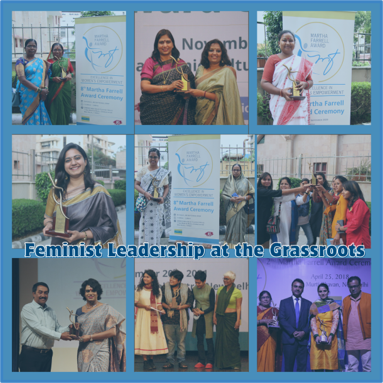
 Through the journey of the Martha Farrell Awards and the everyday work of the Martha Farrell Foundation, we have had the privilege of engaging with a wide range of individuals and organisations across the country. These interactions have taken us into homes, community spaces, small offices, training rooms, police stations, government buildings, and informal gatherings. In these diverse spaces, we have met women leaders who work tirelessly, often quietly and without recognition, to create change within deeply unequal and complex contexts.
Across these journeys, one reality surfaces again and again. Feminist leadership exists everywhere, yet it often struggles to find space, legitimacy and sustained support. This is not due to a lack of vision, commitment or impact, but because prevailing leadership systems have not been designed to hold women’s lived experiences, values and ways of working. The structures that shape leadership, including networks, institutions, funding systems and organisational frameworks, continue to privilege narrow, urban and masculine ideals of authority and success.
This blog is an attempt to reflect on what I have learned through these engagements. It brings together observations, lived experiences and quiet learnings about what makes feminist leadership difficult to grow and sustain, and what might help create more enabling, supportive and nurturing ecosystems for it to truly thrive.
Understanding Feminist Leadership
Feminist leadership is not defined by gender, but by values. It is rooted in empathy, fairness and a deep commitment to justice. It recognises lived experience as knowledge and believes that people closest to an issue hold important insight. At an individual level, it shows up as self-awareness, emotional intelligence, reflective practice and the willingness to share power. It values listening as much as speaking, and collaboration over competition.
Trust, transparency and accountability are seen as everyday practices. Organisationally, feminist leadership encourages collective decision-making and participatory structures. It nurtures cultures of care where well-being and sustainability matter as much as measurable outcomes. It questions rigid hierarchies and works to redistribute voice and authority. At its heart, feminist leadership sees change as relational- built through dialogue, solidarity and shared responsibility.
Challenges to Feminist Leadership and Pathways to Stronger Ecosystems
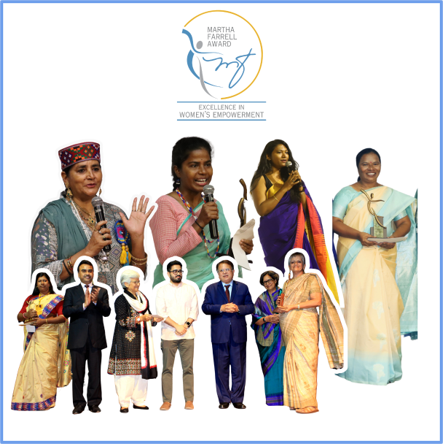 Many women leaders, especially those working at the grassroots and in smaller cities, speak about the quiet struggle of building networks and accessing opportunities. Platforms for funding, partnerships, learning and recognition remain largely concentrated in urban and professional spaces, making them feel distant and hard to reach. Travel, language, access to information and self-confidence slowly turn into invisible barriers, shaping who gets to enter these spaces and who remains at the margins.
As a result, even when women are doing deeply transformative work within their communities, their journeys often remain unseen. Their impact travels slowly, if at all. This invisibility affects not only access to funding and partnerships, but also whose stories get told, whose voices are amplified, and whose leadership is recognised and celebrated.
Leadership is often understood through particular ways of speaking, dressing and presenting oneself. These expectations are rarely stated openly, yet they are deeply felt. Over time, metropolitan spaces have come to define what leadership should look and sound like, slowly creating standards that appear natural but are, in fact, quite narrow.
For grassroots leaders working in tier two and tier three cities, these silent norms shape how they are perceived. Unwritten checklists begin to operate in the background, and those who do not fit into them are quietly sidelined. Accent, vocabulary, comfort with English and specific styles of communication become markers of credibility, often overshadowing experience, commitment and impact.
When leadership is defined so narrowly, many capable grassroot leaders, especially women find themselves pushed to the edges. Their lived knowledge, community wisdom and emotional intelligence remain undervalued. Over time, this produces a quiet sense of alienation, where they feel compelled to constantly reshape themselves to belong in spaces that were never designed with them in mind.
For many women leaders, engaging with formal institutions such as government departments, police systems and legal structures is a critical part of justice-oriented work. Yet these spaces often feel intimidating, rigid and inaccessible. Procedures, hierarchies and bureaucratic communication leave little room for empathy, dialogue or flexibility.
Repeated experiences of being unheard or dismissed slowly erode confidence. Advocacy then becomes not only about claiming rights, but also about constantly negotiating legitimacy. For grassroots women leaders, this adds an emotional and psychological burden to already demanding work, making leadership a continuous process of resistance, resilience and negotiation.
Another significant challenge lies in how organisational development and leadership itself are imagined and measured. Dominant frameworks prioritise speed, efficiency, hierarchy and competition. While these models offer structure, they leave little room for relational, collaborative and care-centred ways of working, approaches that shape much feminist leadership.
Many women leaders describe how they must continually mould themselves to fit into systems that were never designed with their realities in mind. Philosopher Michael J. Sandel, in his book The Tyranny of Merit: What’s Become of the Common Good?, reminds us how narrow benchmarks of success gradually come to define human worth. When achievement is measured through limited parameters, entire ways of knowing, contributing and leading remain unseen.
A similar risk exists within organisational development frameworks. When leadership is assessed through rigid checklists and standardised indicators, it often overlooks emotional labour, community wisdom, lived experience and collective care, which form the backbone of feminist and grassroots leadership.
Even within feminist and rights-based organisations, women leaders carry an invisible emotional burden. They are expected to be endlessly patient, empathetic and nurturing. Emotional care becomes an assumed part of leadership rather than a shared responsibility.
When women take firm or strategic decisions, they often encounter discomfort, resistance or criticism. Over time, this constant emotional labour extracts a heavy toll. Leadership becomes not only about responsibility and accountability, but also about managing emotions, expectations and relationships, often at significant personal cost.
Many women leaders speak about how their decisions are frequently questioned, revisited and scrutinised, even when their track record is strong. Trust builds slowly, and recognition arrives late, if at all. This ongoing need to justify and prove one’s worth is deeply exhausting.
Leadership, instead of being a space for creativity and growth, begins to feel like a continuous test. The emotional weight of constantly demonstrating competence quietly chips away at confidence and authority, reinforcing cycles of self-doubt and burnout.
Women’s leadership journeys are shaped by intersecting identities of caste, class, religion, geography, disability, sexuality and language. For many, these overlapping realities intensify exclusion, making leadership a continuous negotiation with systems of power.
Alongside these structural barriers lies the burden of unpaid care work. Household responsibilities, caregiving, emotional labour and family expectations severely restrict mobility, time and flexibility. Travel, long meetings and extended engagements become difficult to sustain. Leadership thus becomes not only a professional role, but a deeply personal balancing act.
Women-led organisations often work on issues rooted in lived experience, including gender justice, violence prevention, care work and community empowerment.
Yet funding for this work remains limited, fragmented and largely project-based. This leaves little space for organisational strengthening, team development and staff well-being.
Without sustained core funding, teams remain small, overstretched and emotionally fatigued. Investments in digital infrastructure, documentation systems, learning spaces and organisational processes remain underdeveloped, not due to lack of vision, but because survival takes precedence over sustainability.
In many contexts, women-led organisations are also narrowly positioned as working only on women’s issues. This framing restricts their role within broader development and social justice ecosystems, limiting opportunities for cross-sector collaboration and systemic influence.
If feminist leadership is to truly thrive, we must move beyond symbolic inclusion towards deeper structural transformation. This requires reimagining how leadership, effectiveness and success are understood.
What would leadership look like if care were seen as central to effectiveness and impact?
If collaboration mattered more than competition?
If lived experience was recognised as a form of expertise?
These questions invite us to rethink not only our systems, but also our mindsets.
Creating space for feminist leadership is not merely about representation. It is about reshaping power, trust and authority. It is about building funding models that invest in long-term growth, not short-term outputs. It is about creating learning spaces that honour lived experience alongside technical knowledge. It is about designing organisational frameworks that centre emotional sustainability, collective leadership and care.
Most importantly, it requires listening, deeply and attentively, to the stories, struggles, silences and hopes of women leaders. When leadership ecosystems begin to reflect women’s realities, feminist leadership will no longer need to fight for space. It will simply belong.


