Khushbu joined the Kadam Badhate Chalo (KBC) programme through Each One Feed One, a grassroot organisation where she was learning stitching, and working as a tutor for primary kids. When she first attended the sessions, she was unsure if she wanted to continue. The initial meetings focused on introductions and getting to know one another, and she felt they were not addressing the issues she expected.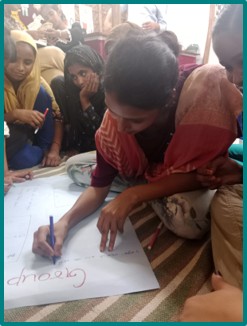
However, as she continued participating, her experience evolved. She found a space where she could ask questions freely, without fear of being judged. Even if she had to ask the same question multiple times, facilitators encouraged her until she understood. For Khushbu, this trust and openness created a sense of safety that allowed her to participate more actively.
There was a time when Khushbu dreaded the five-hour commute to college. Waiting alone at deserted bus stops before dawn, boarding nearly empty buses and walking unfamiliar streets filled her with anxiety.
"I can talk now. Earlier, I would be very afraid and hesitate a lot when confronting someone. Now I can go wherever I want," says Khushbu.
For 20-year-old Khushbu, who lives in Delhi’s Shram Vihar with her parents, five sisters and a brother, this confidence has been built gradually. It emerged through constant community engagements that questioned long-held beliefs about gender, safety and power.
As discussions moved towards gender, sexual harassment and gender-based violence, Khushbu began reflecting on situations she encountered in her everyday life. She learnt to recognise unsafe behaviour, internalised her rights and thought about different ways to seek support.
"I will not ignore it; I will confront the perpetrator. I will share it with another woman on the bus or anyone who can support me. I will inform the bus driver and conductor. If this does not work, I can even call the police," she says..
At home, Khushbu began questioning why household responsibilities were considered a girl’s duty while her brother was not expected to contribute. Initially, her parents responded by referring to traditions and the importance of respecting elders. But Khushbu emphasised and encouraged her mother to attend the sessions as well. Through these discussions, her mother began to reflect on the expectations placed on girls and boys.
Gradually, the dynamics within the household started changing. Today, Khushbu’s brother actively participates in household work. He makes tea in the morning, washes utensils, cleans the floor and takes care of his own clothes.
"Even if there is no one at home, he will wash utensils, clean the floors and wash his clothes," she shares. "It makes him more independent."
The programme also helped Khushbu understand that inequality exists beyond gender. Through the Power Walk activity, she reflected on how caste, religion, class and economic status influence people’s opportunities and the way they are treated.
"Some people are not able to move forward because they don’t have power, and some move forward with every step," she says.
This understanding helped her recognise discrimination in her own surroundings. On one occasion, Khushbu noticed that her friend’s mother served her water in a separate glass. Initially, she questioned whether it was intentional, but when the same thing happened again, she decided to address it. Instead of silently accepting the discrimination, she spoke with the mother when given an opportunity. For Khushbu, this experience reinforced that violence and discrimination are not always visible.
"Jo bolta hai woh bura lagta hai, maarne ka itna bura nahi lagta jitna baaton ka lagta hai." (Words can hurt deeply; sometimes they hurt more than physical harm.)
Today, Khushbu uses her own experiences to support others. As a tuition teacher, she discusses child safety, bullying and the POCSO Act with children because she believes it is her responsibility to create a safe environment for them. When she sees children facing difficulties, she reaches out to facilitators, seeks guidance and tries to support them.
She also encourages her younger sister to speak up when she faces challenges in school, reminding her that staying silent is not the only option.
As Khushbu looks ahead, she wants to continue raising conversations on gender equality and safety wherever she goes including after marriage. For her, change begins when people find the courage to speak.
"Girls should speak up so that the other person cannot oppress them. If you are experiencing something wrong, you should speak up and not keep it to yourself."


