 "I believe it is important to ask questions and seek answers. Questioning society is what helps it move forward," says 17-year-old Nasreen from Gopalpur Basti in Delhi.
For a long time, asking questions did not come easily to her. Growing up with her six brothers, Nasreen often found herself holding back. Every time she questioned something, she was met with judgment or taunts. Slowly, she learnt that staying quiet was easier than speaking up.
When words became difficult to say aloud, she turned to poetry.
"Whenever I am unable to express myself, or I feel unheard, I write everything down. I pour it all out to my best friend, my diary," she says. Today, however, the teenager who once feared asking questions believes that questioning unfairness is necessary for society to change.
That transformation began when she was in Class 7.
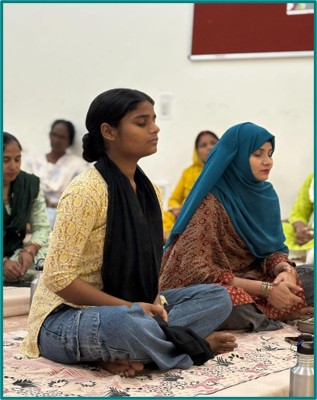
Nasreen attended her first session under Martha Farrell Foundation's Kadam Badhate Chalo (KBC) programme. Unlike any classroom she had experienced before, the session invited adolescents to discuss issues that were usually left unspoken: gender, discrimination, violence, caste and religion.
"The facilitators led activities and asked questions that we rarely discuss in our daily lives. I felt connected to the programme immediately and volunteered to become a part of it." For Nasreen, this was the first time she realised that her questions were not something to be ashamed of; they were valuable.
As she continued attending the sessions, something shifted.
Initially, she only listened. Gradually, she started answering questions. Soon, she began asking on her own. With every discussion, her confidence grew. She started recognising that many expectations placed upon her were not because of her abilities, but because she was a girl and because of her religious identity.
"I try not to focus on my religious identity and gender. If I work hard and speak for myself, I will move forward in life."
The change was not just in what she believed it was reflected in how she lived. Today, if someone speaks to her disrespectfully, she asks to be treated with dignity. She questions practices within her family and community when she feels they are unfair. Instead of silently accepting discrimination, she reflects, speaks up and makes decisions based on what she believes is right.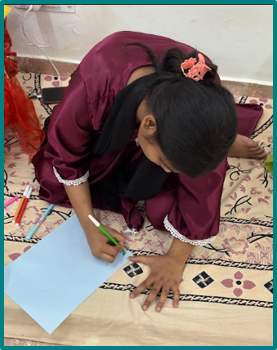
The KBC programme also expanded her understanding of the world beyond her own experiences.
"Topics related to discrimination and violence based on gender, caste and religion are often not talked about. But if we don't discuss them, society cannot progress." Through participatory activities such as the Power Walk, Nasreen began to understand how caste, class, gender and religion create unequal opportunities for different people.
"We discussed the gaps that exist because of caste, class, religion and gender, the same inequalities that we see around us every day." She also learnt that violence is not limited to physical assault.
"Violence can take different forms. Even when adults beat children, that is violence." These conversations helped her develop empathy as well as the confidence to respond when she witnessed violence.
Today, Nasreen supports women experiencing violence by helping them think through the next steps ensuring their immediate safety, encouraging them to approach the police when necessary, and standing by them through the process. She also engages men and boys in conversations about why violence should not happen in the first place.
"I feel I can speak up against violence now." The transformation within Nasreen has also influenced the people around her.Among her friends, she encourages both girls and boys to challenge gender stereotypes and treat one another equally. Within her community, she mobilises adolescents to attend awareness meetings on gender-based violence and believes that every conversation can inspire another.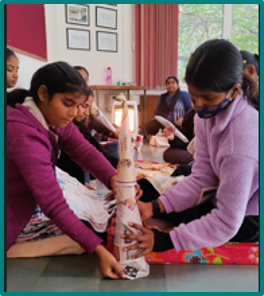
"I will speak with my friends, and my friends will speak with someone else." Then she smiles and adds, "Karawan ek se shuru hota hai aur aage badhta jata hai."A caravan begins with one person and keeps moving forward. Her dream today is to study law at a leading university in Delhi and work on cases related to property rights and gender-based violence.
Perhaps the biggest marker of change is not only how Nasreen sees herself, but how others see her. "Earlier, people questioned me. Now, even my neighbours believe that I can become someone."
For Nasreen, the journey has never been about finding all the answers. It has been about finding the courage to ask the first question. And in doing so, she has become someone who is helping others find their voices too.


